Google forced to change how Nest speakers work following Trade Commission ruling for Sonos [Update]
Sonos and Google havebeen at war with each other for years now, as the former company alleges some major copyright and patent infringement. Aslawsuits and accusations of theft have continued to pile up, Google has been forced to make changes to its software in response. The company was just handed its biggest blow yet, as Sonos won a major court decision that, at worst, could result in an import ban on some of Google’s most popular products, but in the meantime will force changes to how Google’s smart speakers work.
As reported byThe New York Times, the US International Trade Commissionhanded down a victory to Sonos today, finding Google guilty of violating intellectual property from Sonos without permission. This decision comes on the heels of preliminary resultsreleased last August, in which a judge found Google to be in violation of the Tariff Act of 1930. Today’s events represent a final ruling from the USITC; the matter now heads to a presidential review for a possible veto.

Assuming the Biden administration takes no action, a ban on importing infringing devices will go into effect in 60 days unless circumventions to the patent infringements aren’t implemented. Part of the ITC ruling includes carve-outs for those exact circumventions, and Google reported toThe Vergethat “We do not expect any impact to our ability to import or sell our products,” nor will customers “experience any disruption.” In aforum postdetailed below, Google laid out some of the changes coming to Nest speakers that will allow it to avoid a full import ban.
Although a complete list of affected devices has yet to be released, Sonos had initially requested the USITC block Google’s smart speakers, Pixel phones and Chromebooks, and all Chromecast models. It’s unclear whether all of these devices are still covered under this ban — after all,Google initially removed casting volume controlsfrom Android 12 due to its legal troubles. However, the feature made its way back to phonesin this week’s January patch, presumably in a way that no longer infringes on Sonos’s patents. Sonos reported to The Verge that the Google hardware devices impacted by the ruling include recent Pixel phones like the Pixel 4 as well as the Nest Hub, Nest Mini, Chromecast dongles, and any Pixel Chromebooks with YouTube Music pre-installed.

The company may have been working behind the scenes to remove infringing software from other devices as well. However, asBloomberg reports, Sonos submitted a filing on December 2nd stating Google hadn’t yet implemented any of its software changes into its products.
Sonos provided us with the following statement on today’s decision:

“We appreciate that the ITC has definitively validated the five Sonos patents at issue in this case and ruled unequivocally that Google infringes all five. That is an across the board win that is surpassingly rare in patent cases and underscores the strength of Sonos’s extensive patent portfolio and the hollowness of Google’s denials of copying. These Sonos patents cover Sonos’ groundbreaking invention of extremely popular home audio features, including the set up for controlling home audio systems, the synchronization of multiple speakers, the independent volume control of different speakers, and the stereo pairing of speakers.
It is a possibility that Google will be able to degrade or eliminate product features in a way that circumvents the importation ban that the ITC has imposed. But while Google may sacrifice consumer experience in an attempt to circumvent this importation ban, its products will still infringe many dozens of Sonos patents, its wrongdoing will persist, and the damages owed Sonos will continue to accrue. Alternatively, Google can —as other companies have already done —pay a fair royalty for the technologies it has misappropriated.”

Meanwhile, Google had this to offer us about today’s ruling:
“While we disagree with today’s decision, we will ensure our shared customers have the best experience using our products and do not experience any disruption. We will seek further review and continue to defend ourselves against Sonos’ frivolous claims about our partnership and intellectual property.”
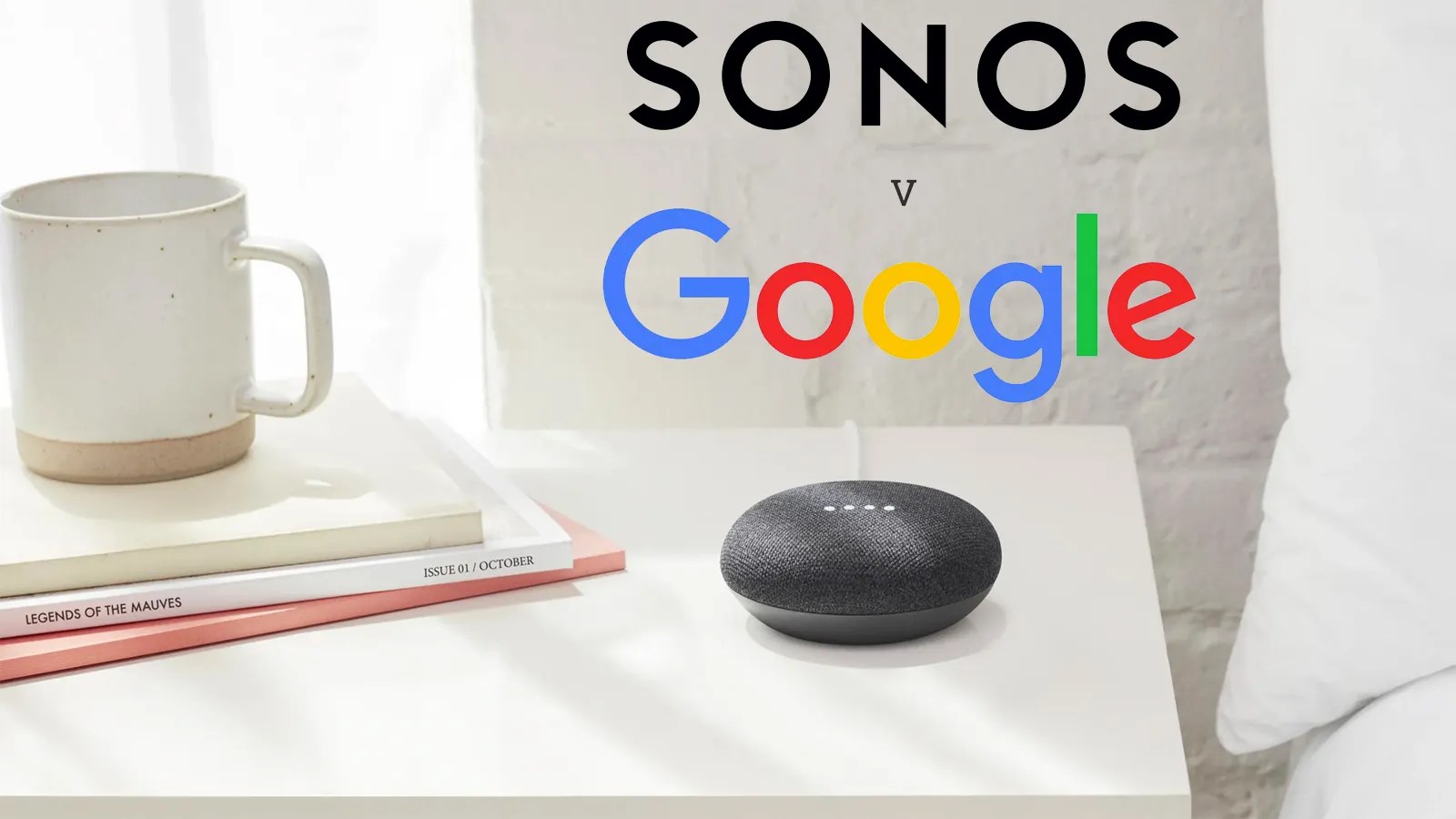
We’ll have to wait and see if the Biden administration is a big enough fan of Google to veto today’s ban.
UPDATE: 2022/01/06 21:37 EST BY DANIEL BADER
Google changes settings to accommodate trade ban
After the ITC released its decision, Google has responded bylisting the changes coming to Android phones and its Nest and Cast-enabled speakersas a result of the ruling. In a Google Nest Community forum post, the company says that Speaker Group volume control functionality will disappear, forcing users to change the volume of its connected speakers manually. Until now, Google allowed users to create speaker pairs of groups from disparate Cast-enabled speakers and adjust the volume in sync, but this all-in-one volume adjustment hewed too closely to one of the patents that Google violated, according to the ITC.
Google also says that “a small set of users” will require a third-party app, called “Device Utility app”, or DAU, to install and update some Nest speakers, likely because the in-app update process also violates one of Sonos’s patents. The full list of changes is below:
New tablets coming September 4
Check your order status!
It’s $30 off for a limited time
No more excuses
Expanded dark theme is here
Pixel downsides never change
