Google Pixel 4 killed Motion Sense, but its Soli sensor lives on
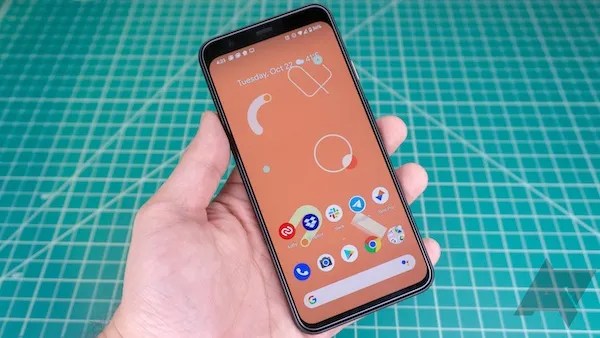
When theGoogle Pixel 4was unveiled in 2019, people were excited to try its face unlock feature. Motion Sense, a new technology that usedGoogle’s custom Soli radar sensor, tracked motion and depth in real time. The feature showed promise; Motion Sense could detect your hand moving toward the Pixel 4 and would automatically unlock your phone when you picked it up. But that promise was short-lived, and the feature has been absent on every Pixel sense. Does this mean we’ve seen the end of Motion Sense, or could it make future appearances? Why was it removed from the Pixel lineup in the first place? As is often the case, multiple factors led to the removal of Motion Sense from the Pixel lineup.
Our content director swiping away the memory of the Pixel 4’s terrible battery life.

Motion Sense enabled more than face unlock on the Google Pixel 4; it also added gestures to control media. A mid-air punch should play or pause music; a quick swipe left or right should change tracks or dismiss an alarm. In theory, this sounded pretty great. No longer would you need to worry about tapping to pause an alarm mid-recipe — you could cancel it with a wave of the hand. But notice we saidshouldinstead ofwouldfor the Pixel 4’s magical gestures; that’s because the features just didn’t work great, no matter how many updates Google pushed to improve them.
Face unlock was a different story. Even now, it’s the closest an Android phone has come to rivaliPhone’s beloved Face ID, and it worked almost perfectly (even if itlaunched missing a critical security feature). Unfortunately, face unlock wasn’t enough to stop Motion Sense from being scrapped in every Pixel model since, and you have to wonder, given the criticism of Google’s in-display fingerprint sensor in the Pixel 6, why Soli has disappeared from Google’s phones altogether.

Remove Motion Sense from the equation and you’ll realize that Soli is an incredible piece of hardware. Creating a miniature radar chip that fits into a smartphone’s top bezel is no easy task. Granted, the Pixel 4’s bezels are chunky compared to its successors, and it would be an even greater challenge to cram a Soli chip intothe nearly bezel-less Pixel 6.
Regulatory issues were likely a major factor that led to the demise of Soli and Motion Sense on future Pixel models. Soli operates in the 60GHz frequency, which is reserved for military and government use in India. The regulatory hurdle left Google with two options: it could disable Soli and Motion Sense on Pixel 4 models sold in India, or it could skip the launch of its flagship inone of the world’s fastest-growing smartphone markets. Google went with the latter, which significantly hurt sales.
In fact, Motion Sense, the Pixel 4’s only biometric authentication feature,is only authorized to work in a handful of countries. If you don’t live in the US, Canada, Singapore, Australia, Taiwan, Japan, or most parts of Europe, you’re out of luck.
Soli was also considerably more expensive than the trusty old fingerprint scanner found in the Pixels that came before and after the Pixel 4. Shortly before the release of the Pixel 5, Rick Osterloh, Google’s SVP of Devices and Services, told The Verge thatSoli would appear again in the future, but it was too expensive for the phone the company wanted to make.

While Soli has been absent from Google phones of late, it’s still alive and kicking. You’ll find it in thesecond-generation Nest Hub, and it seems like a better product fit for the technology. Many of the Google Pixel 4’s Motion Sense gestures are available on Google’s latest smart display, and they actually work well. Waving a hand at the Nest Hub to pause your media from across the room is easier than trying to yell “Hey, Google” over the Fall Out Boy song that’s blaring from your Nest.
The Nest Hub also relies on Soli to detect when you’re nearby and to monitor your sleep patterns. Placed on a bedside table, the Nest Hub’s Soli radar extends far enough to detect when you’re sleeping, and to track your breathing. Soli even makes an appearance in the refreshedNest Thermostat, but it only detects presence—there are no fun gestures to adjust the temperature in mid-air.

It’s been a wild ride for Soli and Motion Sense. The hype leading up to the release of the Pixel 4 was palpable, but that hype fizzled out quickly. Motion Sense gestures were hit or miss, and excellent biometric authentication wasn’t enough to save Google’s flagship.
Expect to see more of Soli, likelysansMotion Sense, in the future. Google’s Advanced Technology And Projects (ATAP) department showed whatits current Soli projectsin March 2022. Google wants to use Soli to improve the user experience in smart home products. Hopefully, Google will find ways touse Soli for usability and accessibility features; the hardware could help people living with motion disorders and other neurologic conditions. We can easily imagine a future iteration ofProject Divawhere a Soli sensor replaces the button, or as away to identify low speech for Project Euphonia.
Although Soli has a bright future, it’s hard to say the same for Motion Sense. It wasn’t ressurected with theGoogle Pixel 7 Pro, it could certainly show up on future consumer products. The most likely candidate is theGoogle Pixel Tablet coming in 2023, but add Soli and Motion Sense to the slate would require novel thinking, a complete overhaul of Motion Sense, and technical changes that would make it available worldwide.
Carriers get the upper hand
From faster storage to better speakers
Pixel 10 Pro XL charges faster wirelessly
Google’s made several improvements over the years
Things get red hot for Magenta
It helped me wind down before bed
