Summary
AsNarutoreturns home to Konoha from a long training trip with Jiraiya, the high-spirited inauguration ofNaruto Shippudenalsodirectly shows fatally missed potential.Narutois, of course, a series centered around its titular character’s journey to be Hokage alongside comrades like Sakura Haruno and Sasuke Uchiha. The Hokage is a fixture of the village of Konoha, andthis emphasis on Konoha can be a problemas it also underlines a key issue: other regions are spoken of and visited, but they’re rarely given any life and often even forgotten.
Although this problem is prevalent throughoutNaruto, it’s particularly notable inNaruto Shippudenfor the simple reason that the plot revolves around Akatsuki’s attempt to gather the Tailed Beastsfrom all the Jinchuriki. This mission naturally involvestheir travels to multiple villages. However,Naruto Shippudennever gives these villages adequate time. As a result, the world ends up feeling flat where it could feel vibrant.

Naruto’s Symbolism & Mythic Roots Aren’t Just Cool, They’re Key to Understanding the Series
Naruto was massively influenced by religion and mythology, and is definitely one of the reasons it is popular.
The Structure ofNaruto’s World Leaves Room for Growth
Despite Its Size, Naruto’s World Follows Straightforward Principles
The world ofNarutois relatively straightforward. Based around a cluster of countries,Narutoemphasizes hidden villages where shinobi reside and train. The foremost of these is Konohagakure, the “Hidden Leaf Village”, located in the country known as the Land of Fire. However,many other countries and villages also support the series, as shown in the Chunin Exams where shinobi from multiple villages compete to be promoted to higher ranks.
Although shinobi are constantly sent out of Konoha on missions to other villages, it’s rare that viewers and readers are actuallygiven the opportunity to know these places in greater depth. One particular example might be the arc to rescue Gaara from Akatsuki where a glimpse is given into the daily life and political operations of the village of Sunagakure. This arc is notable precisely because it’s an example ofNarutotrying its hardest to give depth to another region but ultimately failing to rise to the challenge.

Once Gaara is rescued, the village is never really revisited. This is an ongoing unfortunate trend forNaruto. The depth awarded to Sunagakure becomes a side note in a story ultimately about Konoha and its exploits. Hardly any other village is given the same screen time inNaruto Shippuden. A more egregious example might be the huge amount of screen time that Killer B receives, bu it’s offset by the relatively meager presence of A and the Hidden Cloud Village.Naruto’s world’s simplicityprovides a blank canvas for added depth, but it goes unused.
Naruto’sApproach To World-Building Has Massive Consequences
A World Too Big To Handle Leads Naruto To Undermine Its Own Themes
The way thatNarutoaddresses the role of other countries hasunintended political and narrative consequences for the story. One example is Konan and her home village, Amegakure: “the Hidden Rain Village”. Amegakure is considered a minor village within the world ofNarutoand is continuously ravaged by war, a status it holds at least as late asBoruto’s episode #157. BecauseNarutoaffords so little focus to these peripheral nations and villages, it has the consequence ofNaruto betraying a promise to restore the village and arguably contributing to Konan’s death.
I find this tendency to sideline these other regions as possible narrative centers questionable. On one hand, it legitimatelyunderminesNaruto’sthemeswhen locations are forgotten and when Konoha seems to be, at best, a hired hand for other villages. Theindividual clans withinNarutoare hardly substantiated, leading to Naruto’s own Uzumaki clan being poorly explained at best.
On the other hand, it’s enjoyable for me to imagine an alternativeNarutowhere a similar plot is approached with Naruto and company traveling to different areas, as viewers gain insight into the places they’re visiting. I would love to see their customs, and the stories and lives of their people. It wouldbring a new dimension to the seriesfor me. Sunagakure shows the other set of possibilities afforded toNarutowhich were, intentionally or not, declined.
Despite Different Aims, the Shonen Titans Could Learn From One Another
As much as I loveNaruto, it’s always been obvious that it tries to do too much at once.
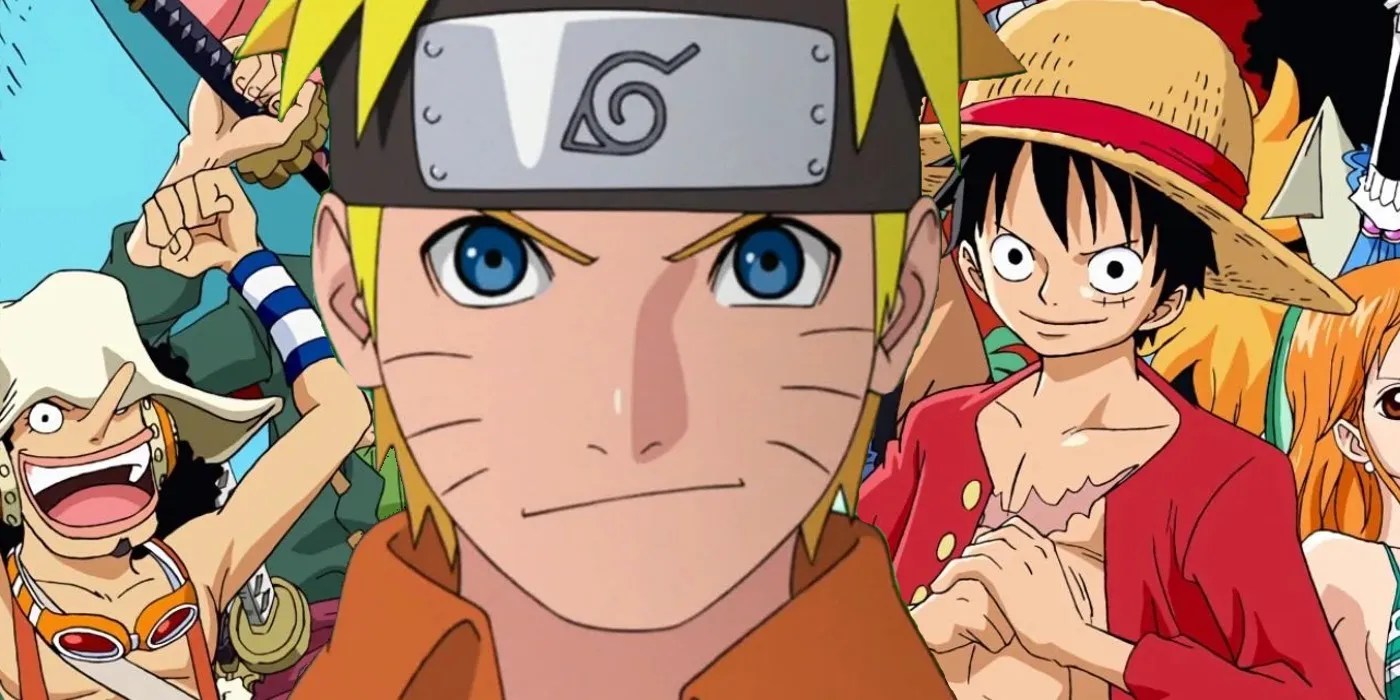
A worthwhile comparison would be betweenNarutoandOne Piece’s reciprocal inspirations. While I’m by no means implying thatNarutoshould have emulatedOne Piece, it’s worth noting that one of the primary appeals ofOne Piecehas beenthe secrets of the world it’s built around -still compelling decades later.Narutokicked off around two years afterOne Piecelaunched. The pair constitute two of the “Big Three” of shōnen, so the comparison is even more apt.One Piececenters on Luffy and a crew of fellow pirates as they navigate the world in search of adventure and to fulfill their goals.

One Piecemanages to characterize every single region that Luffy and crew visit in a way that makesNarutopale in comparison. Every island has a distinct cultural identity, and characters are givendense backstories connecting them to their societies, making clear demarcations between the series' regions. This is basically absent inNaruto. One might note how inthe Fourth Great Ninja War, the perspective remains centered around Konoha while other regions are auxiliary; by contrast, a similar planet-level threat recently emerged inOne Piece’s Egghead Arc, and the impacts on each island are shown.
By comparison, one could even look to a series likeAssassination Classroomto see how a planetary threat is assessed at the level of a specific region byintentionally making the focus of the series smaller.My Hero Academiahas also been criticized for not showing much of the world outside Japan, but that has always been the focus of the series, and it works on a narrative level. As much as I loveNaruto, it’s always been obvious that it tries to do too much at once. It builds an extremely vast world while being unwilling to give those regions life. The effect is a series that, wittingly or not, enforces Konoha as the center of its world.

I can’t help but look at theNarutoworld and feel like it’s a bit empty.
World-building is a tricky process. It’s hard to build a vast world that actuallygives due time to all the places that it incorporates. It’s also important to remember that mangaka inherently work within the constraints of their genre and the demands of their readership and editors. At the same time, it’s hard to fully enjoyNarutowhen the plot involves such a broad horizon of lands with which I, as a viewer, am hardly familiar.
It’s also important to recognize thatNaruto’s world-building is by no means bad. I’m sure that plenty of viewers would argue that the way thatNarutobuilds its world is effective in accomplishing its goals. However, I can’t help but look at theNarutoworld and feel like it’s a bit empty. Everything seems to be trapped by the lens of Konoha, and it ends up making its most dire peacekeeping missions feel vain. I loveNaruto, but I find it impossible to shake the feeling thatit could do world-building better.
Naruto: Shippuden
Cast
Naruto: Shippuden follows Naruto Uzumaki as he returns to Konoha after two and a half years, facing new challenges and enemies, including the Akatsuki organization. The series continues Naruto’s journey and growth as a shinobi while navigating complex alliances and adversaries.
