What Is the Most Fuel-Efficient Speed to Drive Your Car?
Many factors affect the fuel efficiency of your vehicle, including the make, model, drag coefficient, and the type of engine.
However, the speed at which you drive the car is equally important. Nobody enjoys filling up the gas tank, especially given rising fuel costs.

But did you know that there’s actually an optimal speed at which you could drive your car and get the maximum fuel efficiency?
What Is the Most Fuel-Efficient Speed to Drive and Why?
This question is generally subjective, as smaller, more aerodynamic cars are more efficient at higher speeds when compared with trucks or bigger vehicles.
But, in general, the most efficient speed to drive is between 40 mph and 55 mph. It’s important to understand that engines consume fuel, even when idle.

So, if your car’s at 1 mph, it’s actually quite inefficient since your car isn’t covering any significant distance while it’s still consuming gas.
As your car enters the 40 mph range, each 1 mph increase requires significantly more power than the improvement in the engine’s efficiency. Simply put, the increase in power to go from 45 to 46 mph is much greater than, say, going from 3 to 4 mph.

As you go faster, wind drag and tire compression both become important factors. Eventually, even a slight increase in speed causes a much faster fuel burn.
That’s the reason why the optimal speed is generally between 40 and 55 mph for most passenger cars, whereas larger cars, like SUVs and trucks, are more efficient at slightly lower speeds.

Electric cars, with motors inside, are generally more powerful when accelerating. Their lower running and maintenance costs are just a few otherreasons why electric car sales are soaring.
When Does Fuel Efficiency Begin to Drop?
According to theUnited States Department of Energy, fuel economy is the highest when you drive between 35 and 60 mph.
As you go over 60 mph, the fuel efficiency drops, costing you an additional $0.24 per gallon. The reason for that is pretty simple: the faster you drive, the more wind resistance your car encounters, and the more friction your tires encounter.
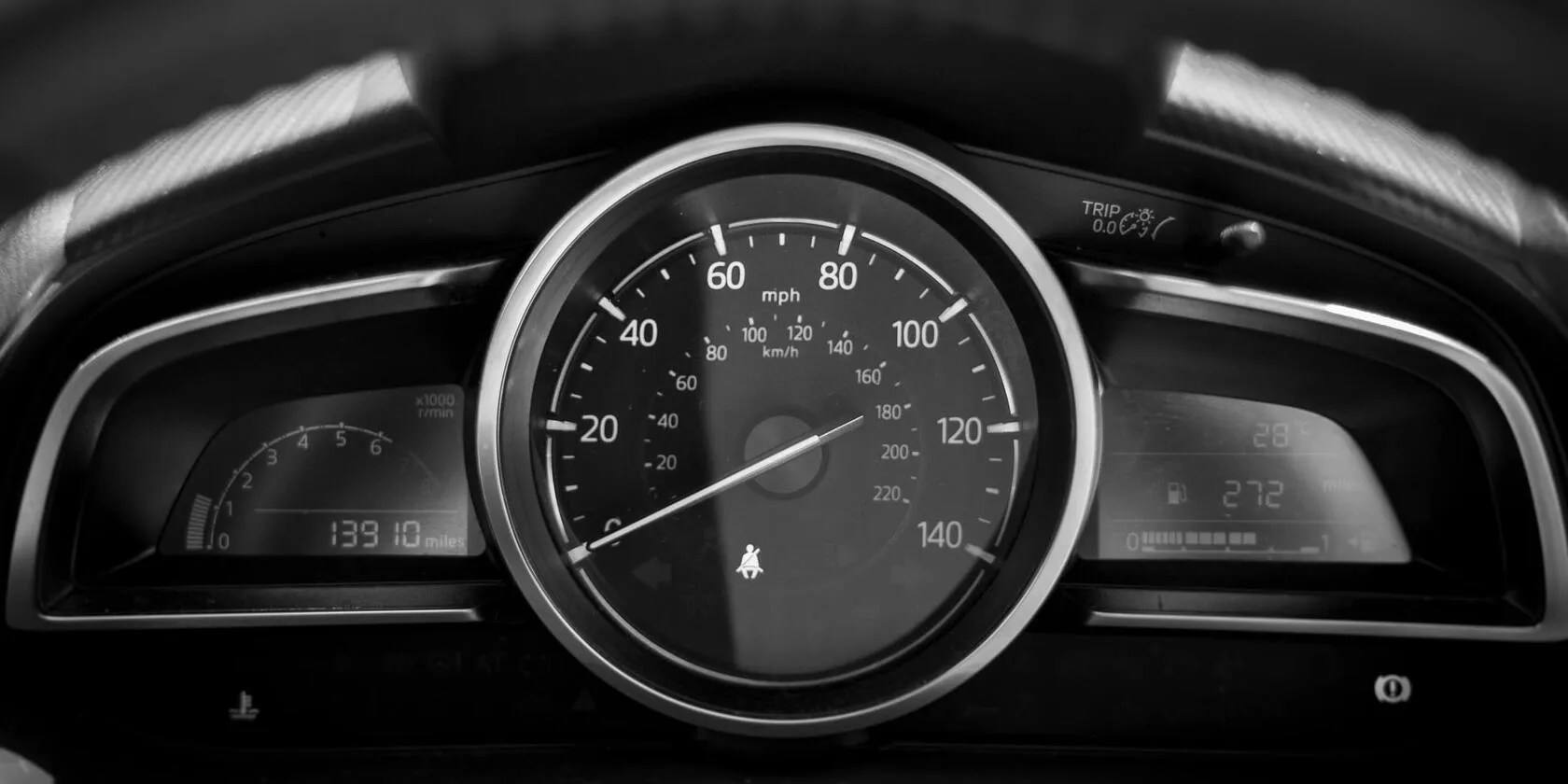
According to official data, the most amount of fuel is consumed to get the car rolling from a still position, especially if you accelerate aggressively.
How Acceleration and Deceleration Affect Fuel Consumption
If you want to maximize fuel efficiency, you probably already know how important it is to keep your car within a steady speed range.
If you accelerate or decelerate too aggressively, your fuel economy will suffer. The way you drive is an important factor that affects fuel economy, so it’s important to adopt fuel-efficient driving techniques.
When you press the pedal down to the floor, the fuel injectors start pumping more fuel, which increases the rate of combustion in the engine, resulting in higher acceleration.
In older cars, this meant getting the richest mix of fuel which provides the greatest burn. However, in newer vehicles, fuel isn’t injected at a linear rate; it’s regulated by an onboard computer.
However, if you accelerate aggressively, the engine produces more torque, causing the vehicle to move forward faster while also overcoming drag and friction. For maximum fuel efficiency, it’s recommended that you accelerate gently. Take at least five seconds to accelerate up to 15 mph, and try to keep your speed within the optimal range. Many cars also come withIntelligent Speed Assist (ISA), which can help you maximize fuel economy.
Similarly, if you accelerate to higher speeds and then take your foot off the pedal, your vehicle will start to decelerate. Braking causes you to lose your forward momentum, which also affects fuel consumption. While you may read that coasting will save you fuel, in modern cars with an ECU, it isn’t the case. Furthermore, you have less control of the car under braking if you are coasting (especially if you’re going downhill rather than on the flat), so it’s not something we recommend.
How To Best Manage Speed on the Road for Maximum Fuel Economy
There are a number of different tips that you should follow on the road if you want to maximize fuel efficiency.
Avoid Idling
One of the best ways to ensure that your vehicle doesn’t consume more fuel is to avoid idling. It’s incredibly inefficient, as your car’s consuming fuel without moving. It’s one of the reasons why fuel economy is bad in the city, since you often have to stop at red lights.
Use Cruise Control When You Can
Rapid changes in vehicle speeds also impact fuel economy. Newer vehicles generally include cruise control, which maintains a set speed on open road stretches.
This mitigates excessive acceleration and deceleration, and ultimately improves fuel economy. The best way to mitigate this is to know how to anticipate the traffic ahead of you. It’ll give you a better idea of when to brake and how much to accelerate so that you can come to a stop if needed.
However, don’t get tricked by using cruise control all the time. It’s best suited to flat surfaces, like the highway, rather than if you’re somewhere with different road gradients.
Properly Shift Gears on a Manual Transmission
The tachometer will tell you your engine’s speed (in rpm). The higher the rpm, the more fuel your car is burning.
Generally, you should shift quicker in the lower gears and then continue to speed up before shifting on the higher gears.
Many Variables Affect Your Car’s Fuel Economy
Even if you keep your car in the optimal speed range, you should know that several other factors affect fuel economy, some of which might be out of your control.
For instance, the amount of traffic, the condition of the roads, the slope you drive on, and the overall condition of your engine are all important factors.
Buying an EV doesn’t have to break the bank. There are affordable EVs, and better still, they have great battery range, too!
Anyone with more than a passing interest in motorsports must see these films.
So much time invested, and for what?
Windows is great, but adding this makes it unstoppable.
Obsidian finally feels complete.
The key is not to spook your friends with over-the-top shenanigans.
